From Piloting to Payoff: Why Membership Organisations Can't Afford to Stand Still on AI
Richard Gott, Chair of the MemberWise Network, on the strategy gap, the 35% capacity prize, and why the real challenge isn't technology — it's engagement
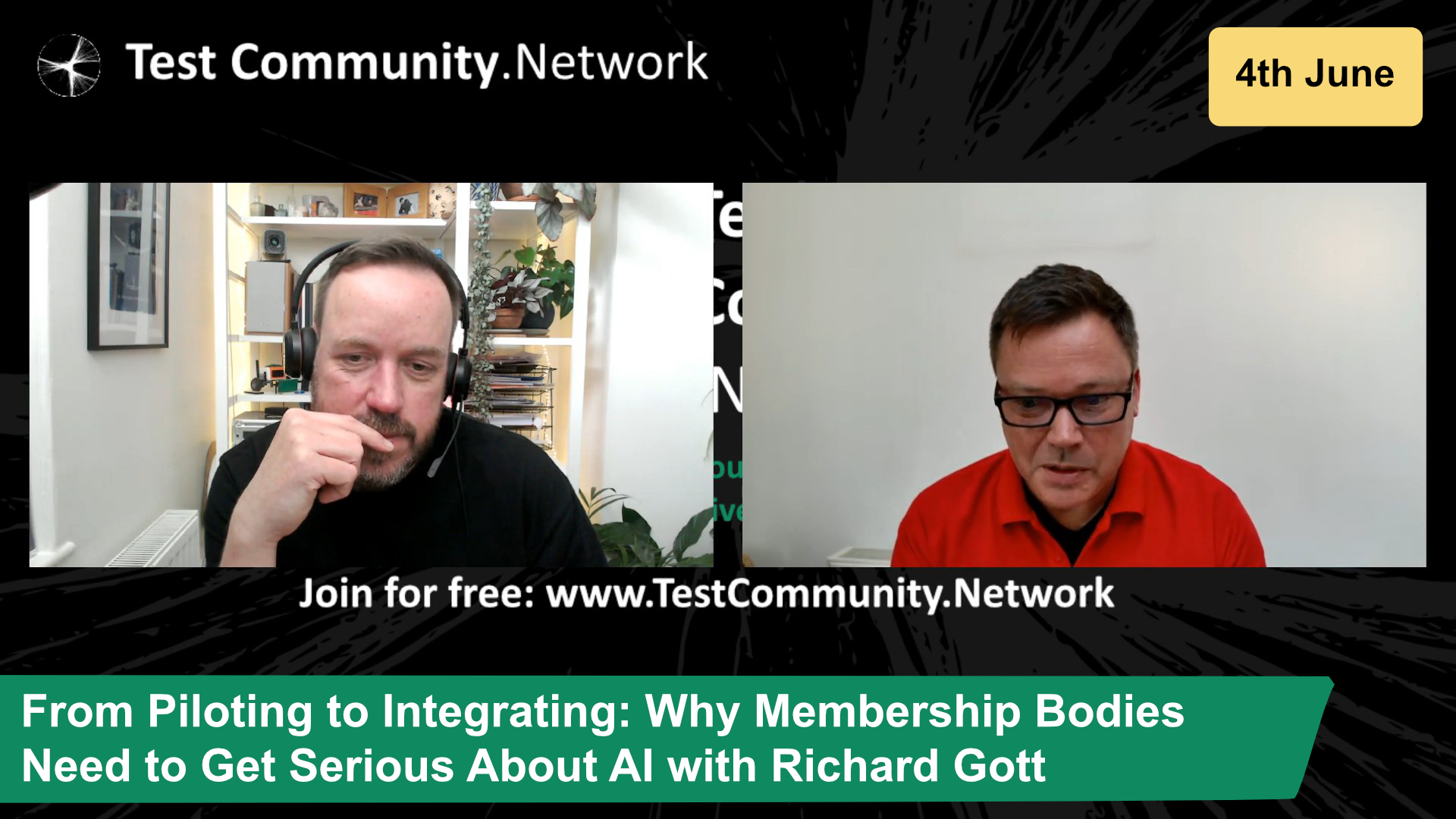
Richard Gott, Chair of the MemberWise Network, on the strategy gap, the 35% capacity prize, and why the real challenge isn't technology — it's engagement
Membership organisations across the UK are at a crossroads. After two years of cautious experimentation with artificial intelligence, the sector is shifting from tentative pilots to genuine integration — but the gap between ambition and strategy remains wide. A new report from the MemberWise Network, which surveyed its community of over 8,000 membership and association professionals, paints a picture of a sector that knows it needs to move faster but isn't always sure how.
Richard Gott, Chair of the MemberWise Network, has spent two decades working inside membership bodies of all shapes and sizes — from the Law Society to the Royal College of GPs — and now runs the network alongside an advisory practice serving UK and EU organisations. When we sat down to discuss the report's findings, he was characteristically direct about where the sector stands.
"Rewind twelve months ago and very much I think the advice that we were all taking or giving each other was let's just pilot it. Let's just try it. Let's give it a go. And it's kind of got to the stage now where it's like, OK, we really need to have got the grips with this and we need to integrate it into what we do. And unfortunately, a lot of organisations are not quite there just yet."
— Richard Gott, Chair, MemberWise Network
The numbers bear this out. When MemberWise first asked about AI adoption a couple of years ago, just three percent of membership organisations were doing anything with it. Fast forward to 2026, and that figure has climbed to nearly twenty percent — a dramatic leap in a short window. But dig beneath the headline and the foundations look less solid. Only around thirty-five percent of membership bodies have a membership engagement strategy in place. Fewer still have a formal digital strategy. And when it comes to dedicated AI or data strategies, the figures drop further still.
Size plays a predictable role. Larger organisations — better resourced and more likely to have dedicated technology teams — tend to have strategies and plans in place. Smaller bodies are often taking what Gott describes as a more "DIY approach", trying things in an iterative, start-and-stop fashion. The risk, he suggests, is that organisations are running before they can walk — adopting tools without the strategic scaffolding to make them effective.
"If you can properly automate, integrate AI into an average department within a membership organisation, typically you can increase capacity by about thirty-four, thirty-five percent. You imagine having a thirty-five percent capacity — you could be doing some fantastic things for your members that perhaps were not even possible a couple of years ago."
— Richard Gott, Chair, MemberWise Network
That statistic — drawn from US association data and applied to the UK market, where the operational work is broadly comparable despite differences in scale — is the kind of figure that should focus minds. But Gott is quick to point out that the opportunity isn't about cutting headcount. It's about unlocking capacity to do more for members. And that reframing matters, because membership organisations are, by nature, risk-averse. Decisions are often made by consensus, governance structures can be cumbersome, and the instinct to protect professional standards runs deep.
The concerns are layered. At one level, organisations worry about the impact of AI on the very professions their members work in — the stories about trades and roles being made redundant. At another, they're grappling with how to use AI to enhance their own services: making content more discoverable, deploying agents that can surface the right information at the right time, and improving the tools that members actually interact with.
Some are already doing impressive things. Gott points to the Institution of Engineering and Technology, the UK's largest engineering institution, which has built its own AI tool. By feeding in academic papers, conference presentations and member data, the IET used AI to challenge an assumption about where to hold a conference in Germany — and discovered that the data pointed to a completely different location within the country. It's a compelling example of AI informing decisions rather than replacing human judgement.
"You've got an example of AI informing decisions based on face-to-face. Even as a concept, that's quite interesting."
— Richard Gott, Chair, MemberWise Network
At the other end of the spectrum, many organisations are using AI for more everyday tasks — polishing press releases, optimising content — but cautiously, and from a quality assurance perspective rather than handing the keys over entirely. MemberWise is advocating that members proactively challenge their technology providers: what's on the AI roadmap? How is it being integrated? What should we expect?
But technology adoption is only part of the story. The deeper challenge, Gott argues, is member engagement — and here the sector has long-standing weaknesses that AI could either solve or expose. Ask a typical member, unprompted, what they get from their organisation, and they'll mention a website, a journal, maybe a newsletter. Prompt them with the full list of benefits and the reaction is often surprise. Organisations are sitting on a wealth of value that they simply aren't surfacing effectively.
The key, Gott suggests, is understanding "value drivers" — the fundamental reasons people join and stay. A trade union member joins because they want protection if something goes wrong, meeting a basic safety need. A professional body member might be after credentials, CPD, or peer connection. The more of these buttons an organisation can press, the more engaged the member becomes — and engagement is what turns a passive subscriber into an active advocate.
"Moving from a subscription to a membership is much more sticky and it's much more likely that you will be engaged. And that has a massive impact on member retention and recruitment."
— Richard Gott, Chair, MemberWise Network
This is where the Netflix analogy comes in — and where it falls short. Yes, membership organisations need to personalise the experience, surfacing relevant content and tailoring communications to individual members. But it needs to go further. Gott describes it as "Netflix plus" — combining the personalised content discovery of a streaming platform with the cross-sell and upsell sophistication of Amazon and the conversational responsiveness of an Alexa. He illustrates the point with an example from pre-pandemic work with Everyman Cinemas, mapping the entire member journey from online sign-up through physical visit to post-experience follow-up, identifying every touchpoint where personalisation could deepen engagement and drive commercial value.
The ultimate goal, though, isn't transactional. It's relational. The organisations that get this right move beyond the "I read the magazine, I get my annual renewal" dynamic and into something more powerful: members who actively advocate for the organisation, telling colleagues and peers about the value they get. That advocacy, Gott says, "amplifies the whole membership experience" — and in an era of subscription fatigue, where people can join anything and everything, it's what separates organisations that grow from those that stagnate.
The investment question looms large. UK membership bodies typically spend around three to four percent of their annual budgets on technology. MemberWise argues that needs to rise to five to ten percent if organisations are to keep pace with these evolving technologies. It's a significant shift for a sector that has traditionally been conservative with its spending.
The MemberWise Membership Excellence Conference takes place in November, bringing together membership professionals from organisations as diverse as Forestry England, the ACCA and the Royal Colleges. If the sector's recent trajectory is anything to go by, AI will once again be at the heart of the conversation — but this time, the questions will be less about whether to adopt and more about how to do it well.
Find out more at https://memberwise.org.uk