Research Presentation: AI-Powered Cheat Systems
Exploring the convergence of AI coding and affordable hardware to build undetectable cheating systems
Exploring the convergence of AI coding and affordable hardware to build undetectable cheating systems
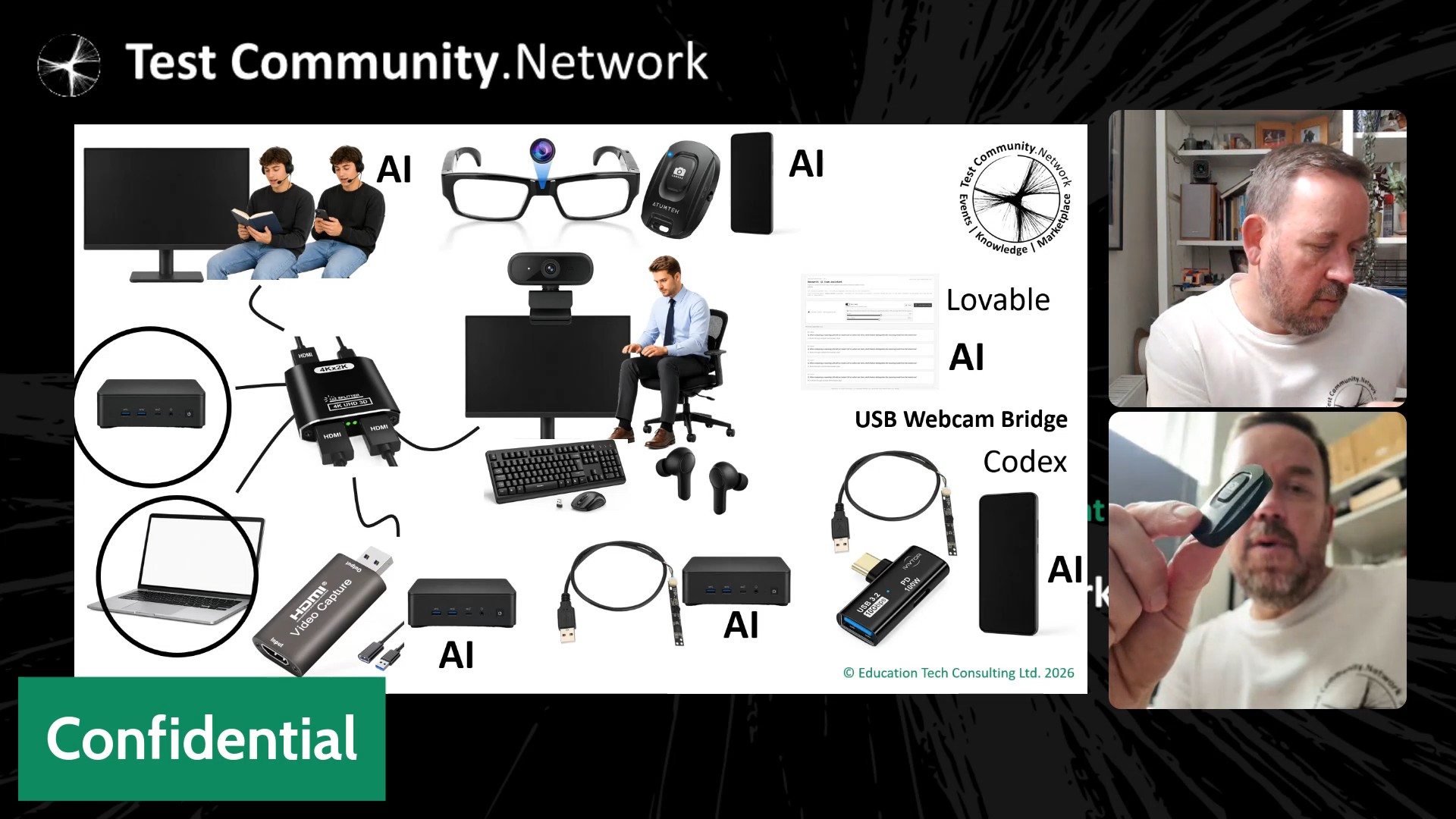
Three technologies are converging at speed: multimodal AI models that can interpret images of exam screens, AI coding agents that let anyone build working software in hours, and consumer hardware that keeps getting smaller and cheaper. For the assessment industry, this convergence creates a threat that sits almost entirely outside the reach of current security measures.
Tim Burnett, founder of the Test Community Network, has spent recent months investigating a single research question: can one person, acting alone, combine cheap technology from Amazon with AI coding tools to build a functioning, off-device cheat system? The answer, and its implications, form the basis of a gated two-part research presentation now available to assessment professionals.
"Any hardware disconnect between AI systems and the devices being used can now be quite easily bridged. A lone individual can build a working system with no specialist skills."
— Tim Burnett, Founder, Test Community Network
The critical shift is that the threat has moved off-device. The industry has invested heavily in on-device protections — lockdown browsers, data forensics, screen monitoring — but if a system has line of sight of the exam screen and no digital connection to the platform, those defences have a significant blind spot. Tim's research demonstrates that bridging the gap between off-the-shelf hardware and AI no longer requires specialist technical skills. What once demanded months of software development can now be achieved by a lone individual in a matter of hours.
"The threat isn't on the device. Off-device threats are significantly more capable now, and all they need is line of sight of the screen."
— Tim Burnett, Founder, Test Community Network
Part one of the presentation walks through the full research process, the hardware and AI coding tools involved, the total cost, and what the findings mean for the industry. Part two is a live demonstration of the various methods tested, including the use of smart glasses, showing how each system works in practice and how difficult they are to detect.
Tim's view is clear: organisations delivering high-stakes multiple choice examinations via online proctoring need to act now. Whether that means redesigning assessments to be AI-relevant, tightening physical controls in test centres, or having honest conversations with technology providers about the limits of current detection, the window for adapting is narrowing. As Ethan Mollick has noted, today's AI is the worst it will ever be — and the same trajectory applies to the hardware.
The full two-part research presentation is available by request for members of the Test Community Network (free to join, easy to unsubscribe). Complete the form above to request access.