The Social Lift
How Assessment Reform Is Reshaping Central Asia
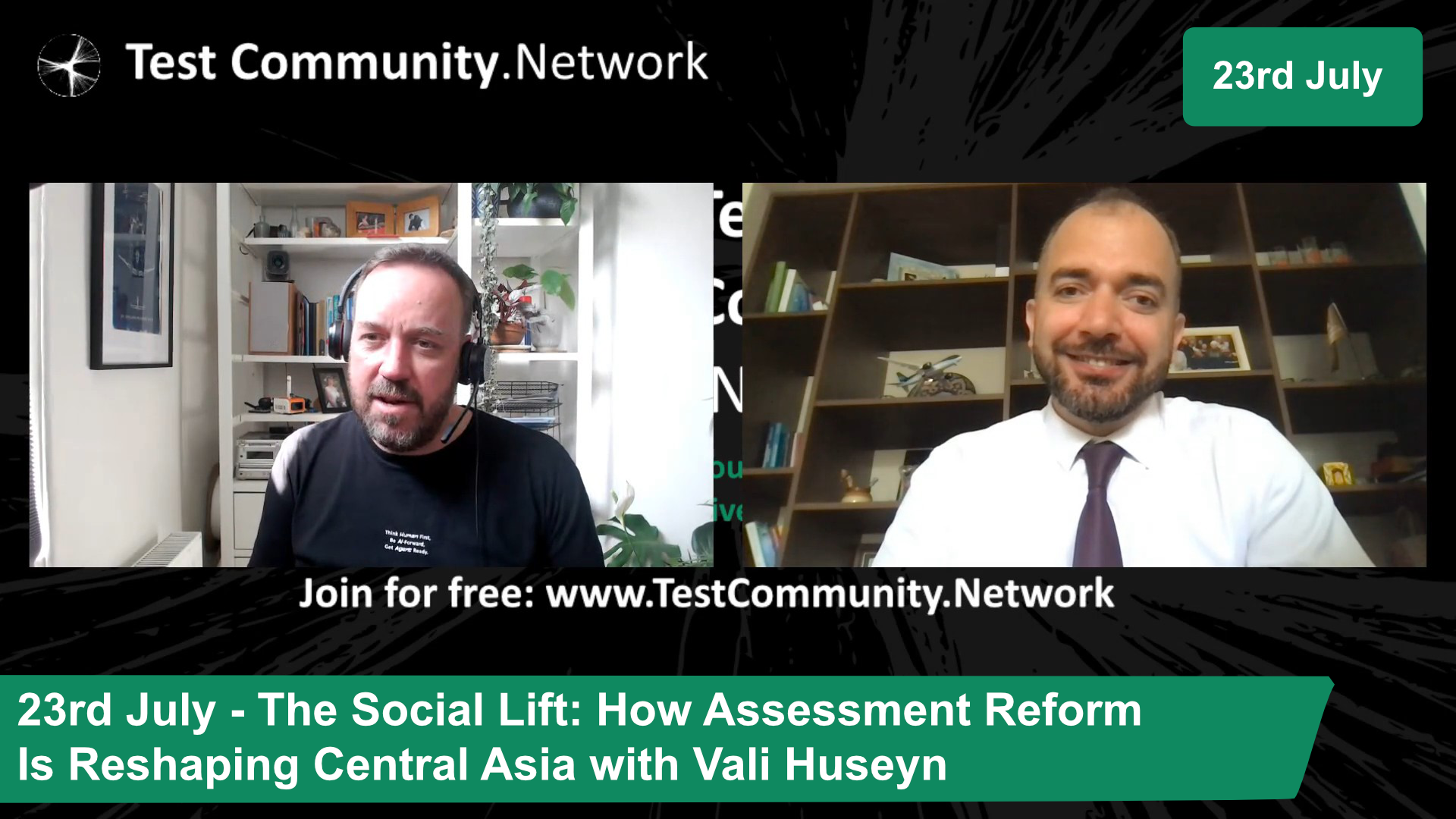
How Assessment Reform Is Reshaping Central Asia
When we talk about assessment reform, the conversation usually circles back to the same handful of familiar systems. But some of the most dynamic and instructive work is happening much further east — across Central Asia and the Caucasus, where governments are digitising exams, rethinking what they measure, and treating assessment as something far bigger than a test.
In this episode, Tim Burnett sits down with Vali Huseyn, a regional assessment expert who works with ministries and government bodies across Central Asia and the Caucasus to reform large-scale assessment. Based in Azerbaijan, and well known within the IAEA community, Vali brings not just technical expertise but the linguistic and cultural fluency to understand what each jurisdiction actually needs.
"In a nutshell, I enjoy supporting and promoting the good practices in the region."
— Vali Huseyn, Regional Assessment Expert, Central Asia & Caucasus
Ask Vali which country is leading the charge, and the answer comes quickly: Kazakhstan. The region as a whole is energetic — rich in resources, with a growing population and a real appetite for development — but Kazakhstan stands out for moving on two fronts at once.
"Kazakhstan is a pioneer in both digitising the mode of assessment and changing the culture of assessment — from knowledge-based to more competency-based, and readiness for university."
— Vali Huseyn, Regional Assessment Expert, Central Asia & Caucasus
That shift hasn't happened in isolation. Kazakhstan has invested heavily in its higher education landscape, opening some twenty-five to thirty new campuses — including branches of UK, US and other international institutions. That expansion created a very practical problem: how do you fairly admit local students into all these new universities? The answer was a call for modernisation, backed at the highest levels.
One of the thorniest challenges in going digital is infrastructure. If you simply take a paper bottleneck and turn it into a computer bottleneck, you risk disadvantaging more candidates than you help. Kazakhstan's National Testing Center found a neat way around it — by spreading the load rather than concentrating it.
"They split the one-day load into five... it's a five-time opportunity for students to feel comfortable, prepared and ready for the high-stakes assessment."
— Vali Huseyn, Regional Assessment Expert, Central Asia & Caucasus
Candidates can now sit the university admission test up to five times across the year, with two of those attempts counting as the main results for government scholarships. It eases the strain on infrastructure and takes some of the pressure off students. School-leaving assessment, meanwhile, largely remains paper-based, and each country handles the relationship between school exams and university admission differently — merged in Azerbaijan, separate and run by the Ministry of Higher Education in Kazakhstan and Uzbekistan.
Perhaps the most powerful idea in the conversation is Vali's framing of assessment as a "social lift" — the engine of social mobility, and a message a society sends about its own fairness.
"If you come from a village, you take an assessment and you become a city person by studying in a more urban environment. So in itself, it changes your socioeconomic status as well."
— Vali Huseyn, Regional Assessment Expert, Central Asia & Caucasus
Each successive assessment — into university, into a master's programme, into the civil service — becomes a rung on the ladder. In a genuinely merit-based system, that makes fairness and transparency non-negotiable, and it's the theme Vali will be taking to the IAEA conference in Toronto this September, drawing on his writing about justice in assessment and the lessons learned across the region.
It promises to be a rich week of parallel sessions, networking and — as Vali beautifully puts it — the rare chance to travel far in your own thoughts, like a long journey with different stops along the way. If Central Asia's experience tells us anything, it's that the how of assessment reform matters just as much as the whether.
Register for IAEA:www.iaea2026.org
Connect with Vali Huseyn on LinkedIn: linkedin.com/in/valihuseyn
Connect with Tim Burnett on LinkedIn: linkedin.com/in/tburnett